

The are video games art debate has sparked passionate arguments among players, critics, and creators for decades. Some see games as powerful storytelling mediums that rival film and literature. Others argue they’re products built for entertainment first, artistry second. If you’re here, you’re likely looking for a clear, thoughtful breakdown of both sides — not just opinions, but real analysis of what makes something “art” in the first place.
In this article, we’ll examine how game design, visual direction, music, narrative structure, and player agency contribute to (or complicate) the artistic conversation. We’ll also explore how evolving technology, indie innovation, and modern multiplayer experiences have reshaped the discussion.
To ensure depth and credibility, this piece draws on established artistic criteria, insights from game design theory, and examples from critically acclaimed titles across genres. By the end, you’ll have a well-rounded perspective to form your own informed stance on the debate.
Beyond Play: Are Video Games the 21st Century’s Dominant Art Form?
The are video games art debate feels outdated. The real question is how games operate as layered art systems. Detractors argue games are toys with better graphics. Yet consider:
- Narrative agency — Players shape outcomes in The Witcher 3, blending authorship and audience.
- Aesthetic design — Titles like Journey use color and music like interactive paintings.
- Mechanical expression — Rules themselves communicate theme (scarcity in Papers, Please).
Interactivity is the differentiator. Unlike film, games require participation, creating empathy through action. Commerce doesn’t negate artistic impact entirely.
Interactive Narrative: The Player as Co-Author
Interactive art hinges on player agency—the ability to make choices that meaningfully shape outcomes. In film or literature, you’re a passenger; in games, you’re handed the steering wheel. That difference turns story into collaboration. Think of it like jazz: the composer sets the key, but the solo is yours. This is where the are video games art debate often finds its sharpest edge—because no painting rewrites itself when you hesitate.
Take The Witcher 3 or Red Dead Redemption 2. On the surface, they’re sprawling epics. Yet underneath, they function like moral mirrors. When Geralt spares a monster or Arthur chooses compassion over cruelty, the narrative bends subtly around those decisions. The plot isn’t a railroad; it’s wet cement, holding the imprint of your ethics. Two players finish the same game with different emotional scars (and sometimes different regrets).
Meanwhile, Disco Elysium turns the mind itself into a battlefield. Skills argue inside your head, nudging, mocking, persuading. Character building becomes storytelling:
- Invest in Empathy, and conversations soften.
- Favor Authority, and tension crackles.
- Ignore Logic, and chaos blooms.
Finally, consider Hades. Its looping structure—fight, fail, repeat—mirrors the mythic struggle it portrays. Progress feels earned because repetition is the message. Like chiseling marble, each attempt refines both character and player.
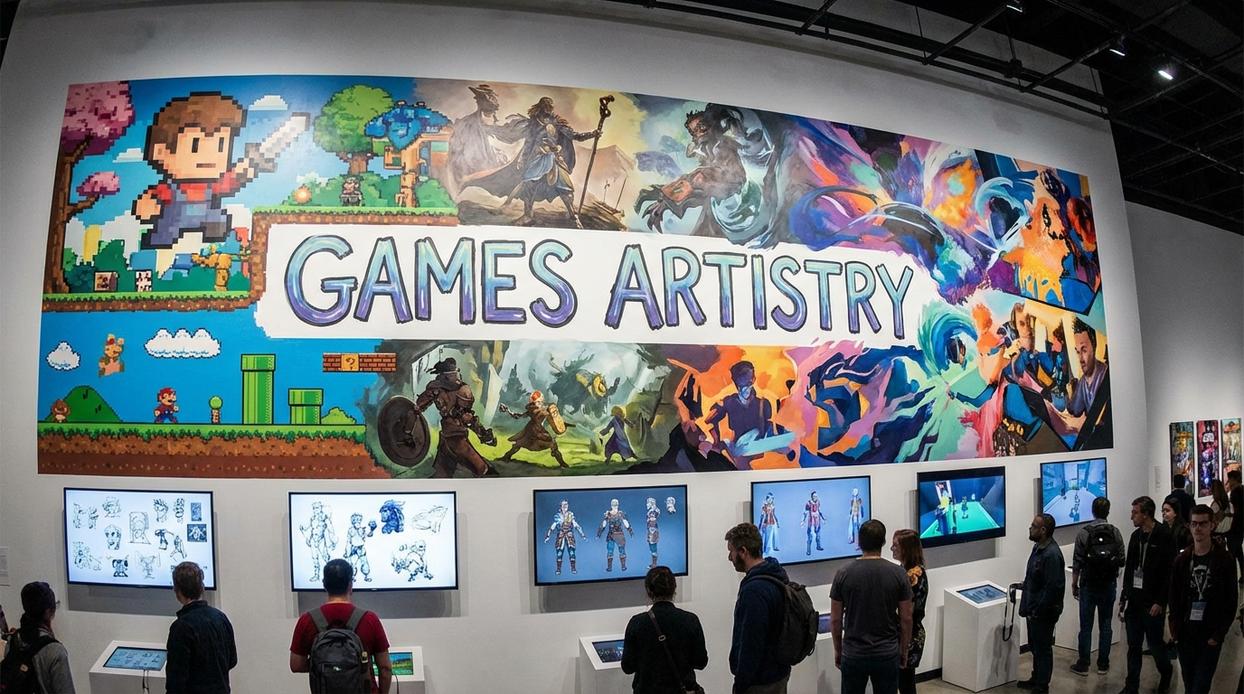
Visuals and World-Building: Crafting Digital Canvases
The first time I stepped into Elden Ring, I ignored the map and just walked. Crumbling arches pierced a sickly gold sky, and every broken statue hinted at a fallen empire. No cutscene explained it. The world did. That’s environmental storytelling—when architecture, lighting, and object placement communicate narrative without a single line of dialogue.
It’s also where the are video games art debate tends to flare up. Some argue that higher polygon counts and 4K textures equal artistic progress. But photorealistic graphics (technical visual fidelity) aren’t the same as art direction (the deliberate stylistic vision guiding a game’s look). A game can be technically flawless and emotionally hollow. (We’ve all played one.)
Consider the contrast:
- Ghost of Tsushima uses a painterly, wind-swept palette inspired by historical cinema.
- The Legend of Zelda: Breath of the Wild embraces cell-shaded stylization, trading realism for timelessness.
Both are artistic. Neither depends solely on hardware muscle.
BioShock does this brilliantly too. Art Deco corridors, propaganda posters, and scattered audio logs build Rapture’s ideology piece by piece. You absorb the story simply by existing in the space.
Even UI/UX (user interface and user experience design) plays a role. A minimalist HUD can heighten immersion, while a stylized menu can reinforce theme. Pro tip: if you notice the UI constantly, it’s probably working against immersion.
For more on shared player perception, see the impact of gaming communities on player experience.
Music in games is more than background noise; it is an emotional engine. Modern dynamic scores—meaning soundtracks that shift in real time based on player actions—tighten during combat, soften in exploration, and swell at pivotal story beats. As a result, no two playthroughs feel identical; the music responds to you, not the other way around. That responsiveness transforms scenes into something personal, almost cinematic.
Consider the soaring themes of Final Fantasy or the Grammy-winning soundtrack of Journey. These scores linger in cultural memory because they attach melody to choice and consequence. If you’ve ever felt your pulse spike as percussion escalates before a boss fight, you’ve experienced design working invisibly.
Yet sometimes the boldest choice is silence. The deliberate absence of music—or the faint hum of wind through ruins—can cultivate dread more effectively than explosive orchestration. Silence forces attention, inviting players to lean in.
Meanwhile, foley—the crafted sounds of footsteps, armor clinks, and distant thunder—grounds fantasy in tactile detail. When every surface sounds distinct, worlds feel believable rather than staged.
So what’s next for players and creators amid the are video games art debate? Expect adaptive audio powered by AI, personalized to playstyles. You might also start noticing your settings—headphones, surround sound, or accessibility tweaks—because immersion is collaborative. After all, once you hear the unseen artist at work, you can’t unhear it. We’re beginning to explore its potential.
Multiplayer as Performance Art: The Human Element
Emergent narratives arise when unscripted players collide in shared worlds. In EVE Online or a Minecraft server, alliances form, betrayals sting, and economies shift like living theater. Consequently, you should seek games with open systems, because freedom fuels collaborative storytelling.
Meanwhile, high-level competitive play functions as performance art: strategy becomes choreography, mechanics become brushstrokes. Watch tournament replays; then practice signature tactic until it feels expressive, not mechanical. (Yes, it’s closer to jazz than chess.)
Finally, cooperative adventures create shared emotional arcs. To maximize that, choose roles that complement friends and communicate.
| Mode | Artistic Lens |
|---|---|
| Sandbox | Emergent narrative |
| Esports | Strategic performance |
Ultimately, the are video games art debate dissolves in play.
The Controller as a Paintbrush: Gaming’s Artistic Future
The are video games art debate is tired. Games have evolved beyond imitation; they are participatory art—creative works shaped by audience input. The real challenge now is building the vocabulary to critique them.
Use this simple framework next time you play:
- Interactivity: How do your choices shape the outcome? (Think branching paths in Detroit: Become Human.)
- Visual Design: What mood do color and lighting create?
- Soundscape: Does the music guide your emotions or tension?
Pro tip: Replay a short section with the HUD off to notice environmental storytelling. You’re not just pressing buttons—you’re co-authoring the experience.
Leveling Up the Conversation Around Gaming as Art
You came here looking for clarity in the are video games art debate, and now you’ve seen the full picture. From immersive storytelling and groundbreaking mechanics to emotional soundtracks and player-driven narratives, games don’t just entertain—they express, challenge, and inspire.
If you’ve ever struggled to articulate why a certain game moved you, frustrated by critics who dismiss the medium, you’re not alone. That tension is exactly why this conversation matters. Games are evolving faster than ever, and understanding their artistic depth helps you appreciate them—and defend them—with confidence.
Now it’s your move.
Stay ahead of industry trends, explore deeper breakdowns of game design and mechanics, and sharpen your multiplayer edge with insights trusted by thousands of dedicated players. Dive into our latest guides, strategy breakdowns, and indie spotlights today—and experience gaming on a whole new level.
 bearglacier is the kind of writer who genuinely cannot publish something without checking it twice. Maybe three times. They came to multiplayer strategy sessions through years of hands-on work rather than theory, which means the things they writes about — Multiplayer Strategy Sessions, Insightful Reads, Undergrowth Indie Game Showcases, among other areas — are things they has actually tested, questioned, and revised opinions on more than once.
That shows in the work. bearglacier's pieces tend to go a level deeper than most. Not in a way that becomes unreadable, but in a way that makes you realize you'd been missing something important. They has a habit of finding the detail that everybody else glosses over and making it the center of the story — which sounds simple, but takes a rare combination of curiosity and patience to pull off consistently. The writing never feels rushed. It feels like someone who sat with the subject long enough to actually understand it.
Outside of specific topics, what bearglacier cares about most is whether the reader walks away with something useful. Not impressed. Not entertained. Useful. That's a harder bar to clear than it sounds, and they clears it more often than not — which is why readers tend to remember bearglacier's articles long after they've forgotten the headline.
bearglacier is the kind of writer who genuinely cannot publish something without checking it twice. Maybe three times. They came to multiplayer strategy sessions through years of hands-on work rather than theory, which means the things they writes about — Multiplayer Strategy Sessions, Insightful Reads, Undergrowth Indie Game Showcases, among other areas — are things they has actually tested, questioned, and revised opinions on more than once.
That shows in the work. bearglacier's pieces tend to go a level deeper than most. Not in a way that becomes unreadable, but in a way that makes you realize you'd been missing something important. They has a habit of finding the detail that everybody else glosses over and making it the center of the story — which sounds simple, but takes a rare combination of curiosity and patience to pull off consistently. The writing never feels rushed. It feels like someone who sat with the subject long enough to actually understand it.
Outside of specific topics, what bearglacier cares about most is whether the reader walks away with something useful. Not impressed. Not entertained. Useful. That's a harder bar to clear than it sounds, and they clears it more often than not — which is why readers tend to remember bearglacier's articles long after they've forgotten the headline.