
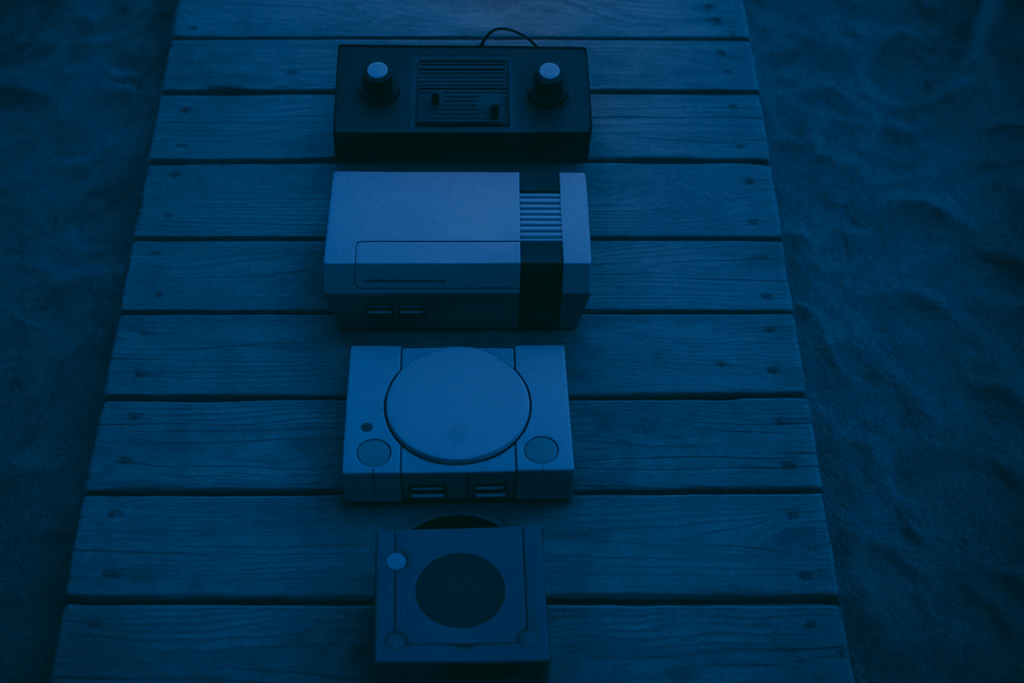
If you’re searching for a clear, up-to-date look at where gaming is headed—and how to sharpen your edge along the way—you’re in the right place. This article breaks down the trends shaping today’s titles, from evolving multiplayer strategies to smarter controller setups and the rising influence of indie innovation. Whether you’re exploring competitive mechanics or simply want to understand how modern design builds on the history of video gaming, you’ll find practical insights you can actually use.
We analyze current gameplay systems, community-driven strategies, and emerging genre shifts to give you a grounded, experience-backed perspective. Instead of hype, you’ll get focused breakdowns of what works, why it works, and how to apply it in your own sessions. By the end, you’ll have a sharper understanding of today’s gaming landscape—and the tools to level up within it.
From Pixels to Playable Worlds
The history of video gaming in the section often feels overwhelming—like booting up a massive RPG without a tutorial. We went from blocky 8-bit sprites in Pong and Super Mario Bros. to photorealistic realms powered by Unreal Engine 5. Each leap—arcades to consoles, cartridges to cloud gaming, split-screen to global multiplayer—reshaped how we play and connect.
Frustratingly, many retrospectives skip the messy middle: failed consoles, clunky controllers, laggy servers (yes, we remember). Yet those growing pains fueled innovation.
• Key shifts: graphics, online play, indie creativity.
Understanding evolution proves why gaming’s cultural impact is undeniable.
The Arcade Era: Forging Gameplay in Coins and Cathode Rays
The birth of an industry didn’t happen in a boardroom—it happened under the glow of cathode-ray tubes. When Pong (1972) introduced its simple back-and-forth paddle mechanic, it established a core gameplay loop—the repeating cycle of action, feedback, and reward that keeps players engaged. Soon after, Space Invaders (1978) escalated the tension with increasing speed and descending enemies, proving that challenge plus clear rules equals obsession (just ask anyone who lined up with a pocket full of quarters).
As a result, the transition from arcade to living room felt inevitable. The Atari 2600 (1977) brought interchangeable cartridges, while the Nintendo Entertainment System (1985) revived a shaky market with tighter quality control and iconic franchises. This shift didn’t just change location—it changed access, turning gaming into a daily ritual rather than a weekend outing.
Because hardware was limited—measured in kilobytes, not gigabytes—developers prioritized responsive controls and skill-based progression over flashy visuals. In other words, mechanics carried the experience. That constraint became a benefit, laying the groundwork for the history of video gaming as a design-first medium.
Meanwhile, the D-pad and two-button controller standardized interaction. Simple inputs lowered barriers to entry, yet mastery remained difficult (easy to learn, brutal to perfect).
The 16-Bit Wars and the Leap into the Third Dimension
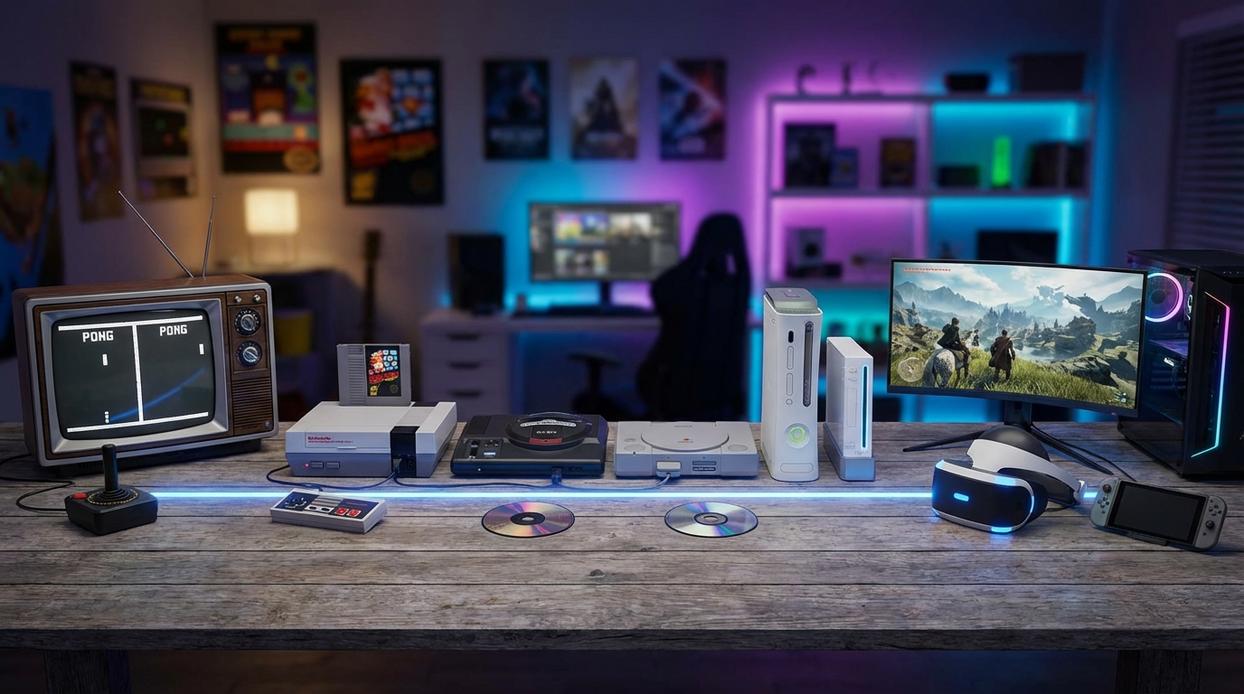
The battle between the Super Nintendo Entertainment System (SNES) and the Sega Genesis wasn’t just playground debate fuel—it was a technological arms race. Each company pushed faster processors, richer sound chips, and more detailed sprites to outdo the other. For players, that competition meant sharper graphics, bigger worlds, and unforgettable soundtracks (yes, the Genesis “blast processing” ads were pure ’90s swagger). The benefit? Better games, faster innovation, and more choice sitting under your TV.
Some argue the 16-bit era was gaming’s creative peak and that modern advancements complicate what was once simple fun. There’s truth there—constraints often spark creativity. But progress expanded what developers could build and what players could experience. That momentum shaped the history of video gaming in the section once exactly as it is given.
The Z-Axis Revolution
The jump from 2D to 3D—adding the Z-axis (depth in a digital space)—changed everything. Titles like Super Mario 64 redefined level design by giving players freedom to explore open environments rather than just move left or right. Instead of memorizing patterns, you navigated space. That shift rewarded curiosity and spatial thinking—skills that made gaming feel immersive, not just reactive.
Narrative Ambition and Storage Power
When games moved from cartridges to CDs, storage expanded dramatically (Sony reported CDs held up to 650MB versus typical cartridge limits under 64MB). More space meant:
- Full-motion video cutscenes
- Orchestrated soundtracks
- Deeper character arcs
Suddenly, games told stories rivaling films.
Evolving Control Schemes
The analog stick—first widely adopted with the Nintendo 64—allowed variable movement speed and precise camera control. Without it, 3D worlds would’ve felt clumsy. With it, navigation became intuitive (your thumbs finally had nuance).
The benefit across all these shifts? Greater immersion, richer storytelling, and mechanics that still influence today’s games.
The Online Revolution: Connecting Players and Worlds
The shift from solo play to connected worlds didn’t happen overnight. In fact, it began with LAN parties—small gatherings where players linked computers over a Local Area Network (LAN), meaning devices connected within the same physical space. Games like Quake and StarCraft proved that real-time multiplayer wasn’t just possible; it was electrifying. Suddenly, strategy wasn’t about beating AI (artificial intelligence-controlled opponents), but outthinking real people.
As internet speeds improved, global servers replaced basement cables. Meanwhile, consoles caught up. Services like Xbox Live and PlayStation Network standardized online access, meaning players no longer needed technical know-how to compete worldwide. Some critics argued consoles would dilute competitive depth. However, broader access actually strengthened multiplayer ecosystems by expanding player bases and skill diversity.
This evolution fueled esports. Competitive titles such as Counter-Strike and League of Legends rely on team-based strategy—coordinated roles, map control, and split-second communication. In simple terms, success depends less on reflexes alone and more on synchronized decision-making (think less lone hero, more heist crew).
At the same time, multiplayer games became social hubs. Voice chat, guilds, and friend lists transformed matches into communities. Research even shows collaborative gaming can enhance cognitive flexibility and teamwork skills (American Psychological Association, 2013), echoing insights from how video games influence cognitive skills and problem solving.
In the broader history of video gaming, online connectivity didn’t just change how we play—it reshaped why we play.
The indie renaissance has rewritten the rules of play. Thanks to accessible engines like Unity and Unreal—software frameworks that let developers build games without creating every tool from scratch—and digital storefronts like Steam, small teams can launch globally without a publisher. As a result, you benefit from a flood of inventive titles at affordable prices.
More importantly, constraints fuel creativity. Without blockbuster budgets, indie creators prioritize mechanics—the core systems that define how a game plays—over photorealistic graphics. Think of minimalist hits like Undertale or the time-bending brilliance of Braid. These games prove fun beats flash (and your wallet agrees).
At the same time, indies expand the history of video gaming in the section once exactly as it is given by daring to explore personal stories and experimental ideas. The payoff for you? Fresher experiences, niche genres, and risks AAA studios often avoid. In short, more variety, more voice, more value.
The Next Level
From pixelated arcade cabinets to sprawling online universes, the history of video gaming in the section once exactly as it is given reflects relentless innovation. In 2023, the global games market surpassed $184 billion (Newzoo), proving games are a DOMINANT cultural force, not a niche hobby. Nearly 3.4 billion people play worldwide.
- Cloud gaming reduces hardware barriers
- VR/AR deepen immersion
- AI-driven design personalizes quests
Skeptics call trends hype, yet Xbox Cloud and Meta Quest sales data show steady adoption. The frontier isn’t slowing; it’s expanding. Multiplayer ecosystems now rival film and music revenues combined. The shift accelerates.
Level Up Your Gaming Knowledge Today
You came here to better understand the trends, mechanics, and strategies shaping modern gaming—and now you have a clearer view of how they connect, from multiplayer tactics to indie innovation and smart controller optimization. By exploring the history of video gaming alongside today’s evolving systems, you’re no longer just playing—you’re playing with purpose.
The real frustration isn’t losing matches. It’s feeling behind. Missing meta shifts. Overlooking hidden gems. Struggling with setups that hold you back. That gap between casual play and confident mastery is what keeps most gamers stuck.
You don’t have to stay there.
Start applying these strategies in your next session. Fine-tune your controller settings. Study emerging trends. Experiment with new mechanics. The players who adapt fastest are the ones who win most.
Ready to sharpen your edge? Dive deeper into the latest strategies, discover breakout indie titles, and stay ahead of evolving game mechanics now. Thousands of competitive and casual players trust these insights to level up—join them and start playing smarter today.
 bearglacier is the kind of writer who genuinely cannot publish something without checking it twice. Maybe three times. They came to multiplayer strategy sessions through years of hands-on work rather than theory, which means the things they writes about — Multiplayer Strategy Sessions, Insightful Reads, Undergrowth Indie Game Showcases, among other areas — are things they has actually tested, questioned, and revised opinions on more than once.
That shows in the work. bearglacier's pieces tend to go a level deeper than most. Not in a way that becomes unreadable, but in a way that makes you realize you'd been missing something important. They has a habit of finding the detail that everybody else glosses over and making it the center of the story — which sounds simple, but takes a rare combination of curiosity and patience to pull off consistently. The writing never feels rushed. It feels like someone who sat with the subject long enough to actually understand it.
Outside of specific topics, what bearglacier cares about most is whether the reader walks away with something useful. Not impressed. Not entertained. Useful. That's a harder bar to clear than it sounds, and they clears it more often than not — which is why readers tend to remember bearglacier's articles long after they've forgotten the headline.
bearglacier is the kind of writer who genuinely cannot publish something without checking it twice. Maybe three times. They came to multiplayer strategy sessions through years of hands-on work rather than theory, which means the things they writes about — Multiplayer Strategy Sessions, Insightful Reads, Undergrowth Indie Game Showcases, among other areas — are things they has actually tested, questioned, and revised opinions on more than once.
That shows in the work. bearglacier's pieces tend to go a level deeper than most. Not in a way that becomes unreadable, but in a way that makes you realize you'd been missing something important. They has a habit of finding the detail that everybody else glosses over and making it the center of the story — which sounds simple, but takes a rare combination of curiosity and patience to pull off consistently. The writing never feels rushed. It feels like someone who sat with the subject long enough to actually understand it.
Outside of specific topics, what bearglacier cares about most is whether the reader walks away with something useful. Not impressed. Not entertained. Useful. That's a harder bar to clear than it sounds, and they clears it more often than not — which is why readers tend to remember bearglacier's articles long after they've forgotten the headline.