
Gaming doesn’t evolve slowly anymore. It pivots.
If you’re trying to understand where things are headed, you’ve probably noticed how hard it is to separate short-lived hype from real, structural change. New hardware drops, AI tools explode overnight, multiplayer models shift—yet not all of it will define the next era. Some of it will disappear as quickly as it arrived.
This is where a clear view of gaming industry trends 2026 matters.
We’ve tracked developer roadmaps, hardware patents, publishing models, and market data to identify what’s actually gaining long-term momentum. Not rumors. Not marketing promises. Signals backed by measurable movement.
In this article, you’ll get a focused breakdown of the biggest shifts in AI integration, hardware innovation, multiplayer design, and game delivery systems—so you can see exactly what’s shaping the future of gaming, and what isn’t.
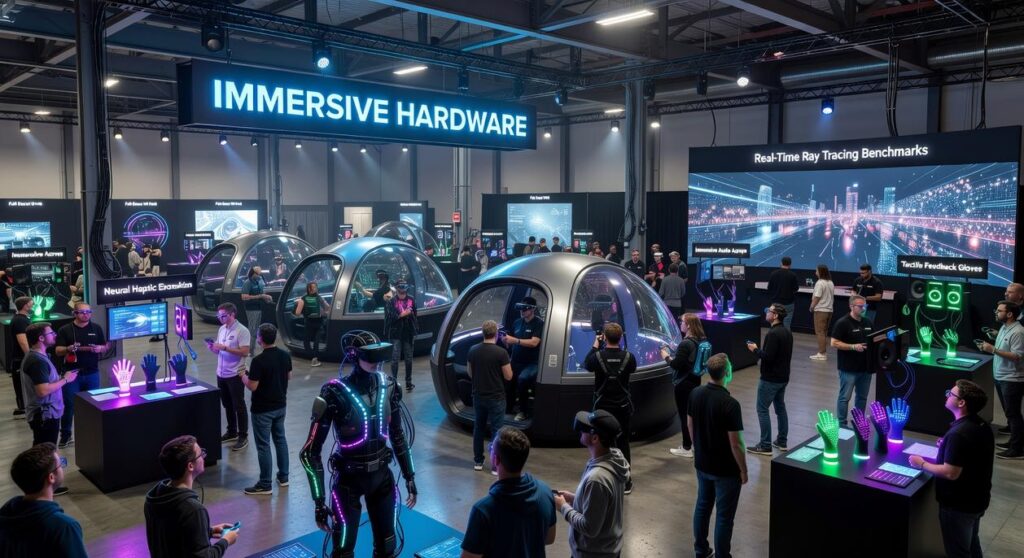
Hardware Evolution: The Leap Beyond 4K into True Immersion
As immersive technologies and storytelling innovations continue to redefine player experiences, the industry’s commitment to inclusivity and representation will also play a pivotal role in shaping these trends, making it crucial to explore the related themes in our article on ‘Representation and Diversity Trends in Modern Gaming‘.
I used to think higher resolution was the finish line. More pixels, sharper edges, bragging rights secured. I was wrong.
1. Mid-Generation Power Spike
When refresh consoles started adding dedicated AI hardware for upscaling and ray tracing, I dismissed it as marketing fluff. “Native 4K or bust,” I said (confidently, and incorrectly). But AI-driven upscaling—where machine learning reconstructs lower-resolution images into sharper frames—proved transformative. NVIDIA’s DLSS, for example, has shown up to 2x performance gains in supported titles (NVIDIA). The lesson? Smooth 60fps with advanced lighting beats raw resolution every time.
2. The Controller as a Sensory Device
I also underestimated haptics. Adaptive triggers and nuanced vibration felt gimmicky—until I played a shooter where trigger tension mirrored weapon recoil. Sony reported that over 80% of PS5 players engage with haptic-supported titles (Sony Interactive Entertainment). Modular controllers are next, especially for accessibility and esports precision. Pro tip: customize dead zones before blaming your aim.
3. The VR/AR Tipping Point
Standalone headsets like Meta Quest reduced friction, but bulky designs slowed adoption. Lighter hybrid AR/VR devices are correcting that mistake. Blending physical rooms with digital overlays feels less “Tron” and more natural evolution.
If gaming industry trends 2026 prove anything, it’s this: immersion isn’t about pixels. It’s about presence.
 bearglacier is the kind of writer who genuinely cannot publish something without checking it twice. Maybe three times. They came to multiplayer strategy sessions through years of hands-on work rather than theory, which means the things they writes about — Multiplayer Strategy Sessions, Insightful Reads, Undergrowth Indie Game Showcases, among other areas — are things they has actually tested, questioned, and revised opinions on more than once.
That shows in the work. bearglacier's pieces tend to go a level deeper than most. Not in a way that becomes unreadable, but in a way that makes you realize you'd been missing something important. They has a habit of finding the detail that everybody else glosses over and making it the center of the story — which sounds simple, but takes a rare combination of curiosity and patience to pull off consistently. The writing never feels rushed. It feels like someone who sat with the subject long enough to actually understand it.
Outside of specific topics, what bearglacier cares about most is whether the reader walks away with something useful. Not impressed. Not entertained. Useful. That's a harder bar to clear than it sounds, and they clears it more often than not — which is why readers tend to remember bearglacier's articles long after they've forgotten the headline.
bearglacier is the kind of writer who genuinely cannot publish something without checking it twice. Maybe three times. They came to multiplayer strategy sessions through years of hands-on work rather than theory, which means the things they writes about — Multiplayer Strategy Sessions, Insightful Reads, Undergrowth Indie Game Showcases, among other areas — are things they has actually tested, questioned, and revised opinions on more than once.
That shows in the work. bearglacier's pieces tend to go a level deeper than most. Not in a way that becomes unreadable, but in a way that makes you realize you'd been missing something important. They has a habit of finding the detail that everybody else glosses over and making it the center of the story — which sounds simple, but takes a rare combination of curiosity and patience to pull off consistently. The writing never feels rushed. It feels like someone who sat with the subject long enough to actually understand it.
Outside of specific topics, what bearglacier cares about most is whether the reader walks away with something useful. Not impressed. Not entertained. Useful. That's a harder bar to clear than it sounds, and they clears it more often than not — which is why readers tend to remember bearglacier's articles long after they've forgotten the headline.