
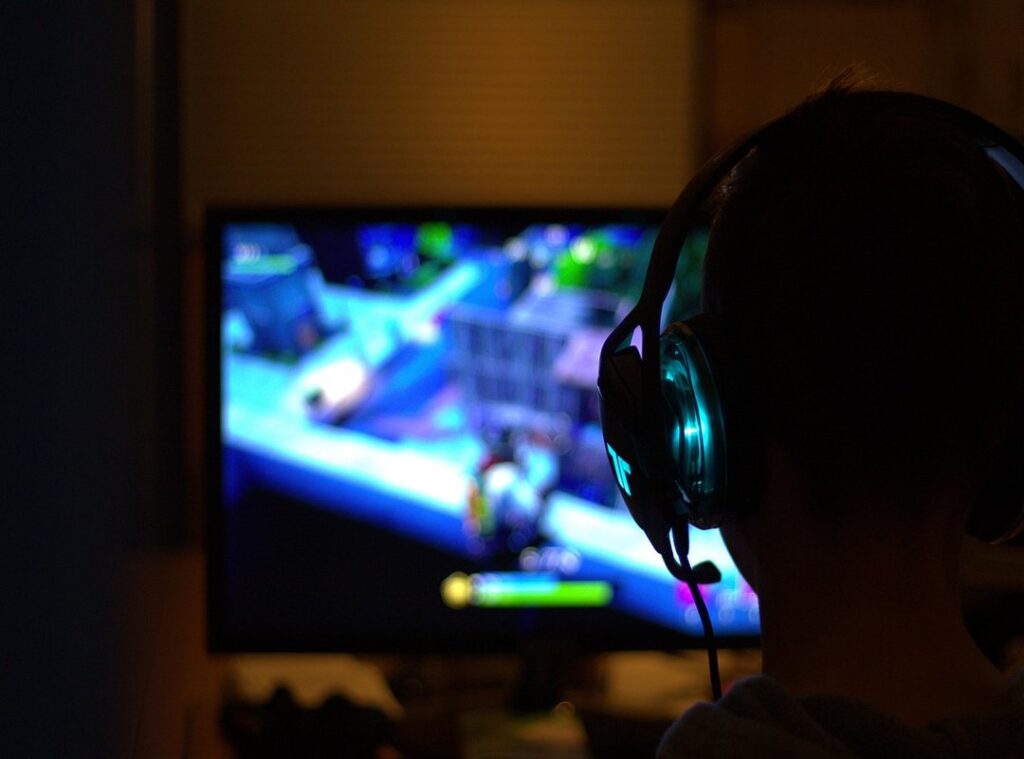
That moment when your headset crackles, your screen freezes, and you lose the match (because) your ping spiked again.
Or worse: you log in and your account’s been nuked. Or you get matched with someone who screams for ten minutes straight.
I’ve been there. More times than I care to count.
I’ve spent years deep in online gaming communities. Fixed lag spikes on every console and PC setup. Recovered hacked accounts.
Blocked toxic players before they ruined a session.
This isn’t theory. It’s what works.
The Guidelines for Online Gaming Feedgamebuzz is that checklist. No fluff. No jargon.
Just clear steps. Performance, security, behavior (that) you can use right now.
You’ll spend less time troubleshooting and more time playing.
And yes, it actually fixes the lag.
Lag Is a Lie. Here’s How to Kill It
Latency is how long your click takes to reach the server. FPS is how many frames your screen draws every second. They’re not the same thing.
Confusing them is why people blame their GPU for high ping.
I wired my setup years ago. Wi-Fi adds jitter. Even “gaming Wi-Fi” can’t beat Ethernet.
Your router doesn’t care if you’re streaming or fragging (it) just shuffles packets. Wired cuts that shuffle in half.
Close Chrome. Close Discord. Close everything except the game.
Update your graphics drivers. Not “when you remember.” Every month. NVIDIA and AMD drop real fixes.
Browsers chew RAM and CPU without blinking. I’ve watched games jump 30 FPS just by killing two tabs.
Not just marketing fluff. Skip the GeForce Experience bloat if you want control.
Windows Game Mode? Turn it on. It’s not magic, but it stops background updates mid-match.
And yes. It actually helps on older rigs.
Shadows and anti-aliasing are FPS killers. Lower them first. Texture quality?
Keep it high. You’ll barely notice the difference. Motion blur?
Turn it off. It’s fake and expensive.
Server location matters more than your CPU sometimes. Pick the closest one. If you’re in Dallas and the server’s in Stockholm, no amount of overclocking fixes that.
Feedgamebuzz has solid real-world latency tests (check) their Guidelines for Online Gaming Feedgamebuzz before you assume your ISP is slow.
Pro Tip: Open Task Manager while gaming. Watch GPU and CPU usage. If either hits 100% and FPS drops, that’s your bottleneck.
Not mystery lag. Just math.
I swapped from Wi-Fi to Ethernet last year. My average ping dropped from 42ms to 11ms. That’s not incremental.
That’s real.
You don’t need new hardware to fix lag. You need focus. And a cable.
Digital Armor: Your Gaming Accounts Are Targets
I locked myself out of my Steam account once. Not because I forgot the password. Because someone else used it.
That’s how fast it happens.
Account security isn’t optional. It’s the floor. Not the ceiling.
If you skip it, you’re playing on hard mode (and) the game is rigged.
Here are the three things I actually do. Every single time.
Strong, unique passwords (not) “Password123” and not the same one for Steam, Epic, and your email. I use a password manager. Yes, the kind that fills in fields for you.
It sounds lazy. It’s not. It’s the only way I keep track of 47 different logins without writing them on a sticky note (which I did once.
Don’t be me).
Two-factor authentication? Turn it on. Right now.
On Steam. On Epic Games. On Battle.net.
I covered this topic over in Latest Tips for Gaming by Feedgamebuzz.
On Discord. Everywhere. It’s the single most effective thing you can do.
If you don’t have 2FA enabled, you’re leaving the front door open while the alarm is off.
Phishing? It’s everywhere. That DM promising free V-Bucks?
Fake. The email saying your Fortnite account is suspended? Fake.
The login page that looks right but has a weird URL? Fake. If it seems too good to be true, it is.
Always.
I clicked a phishing link in 2022. Lost two accounts. Took six hours to get back in.
Felt stupid. Still do.
You don’t need fancy tools. You need consistency.
Use a password manager. Let 2FA. Pause before clicking.
That’s it.
The Guidelines for Online Gaming Feedgamebuzz cover this stuff. But honestly, they overcomplicate it. Just do the three things above.
And stop reusing passwords. Seriously. Stop.
Your account isn’t just data. It’s your progress. Your friends.
Your time.
Treat it like it matters. Because it does.
Toxicity Is a Feature. Not a Bug

I’ve muted more people than I’ve high-fived. And that’s fine.
Online gaming isn’t broken. It’s designed to be chaotic. Public lobbies are like subway cars at rush hour (no) shared rules, no accountability, just noise and friction.
So let’s stop pretending good vibes will magically appear.
Be clear. Be concise. Be constructive.
Say “Enemy top lane” not “Why are you always feeding?!” (Yes, I’ve said both. Regretted the second one.)
Pings work. Callouts work. Screaming into voice chat for 12 seconds about how someone missed a ward does not.
Mute, Block, and Report. Not in that order. In that order.
Every time.
Engaging with toxicity is like arguing with a vending machine that ate your dollar. You’re not going to get your change back. You’re just going to get angrier.
I tried reasoning with a troll once. Spent six minutes explaining why flaming isn’t fun. He replied with “lol ur mad.” That was my last attempt.
Find your people. Use Discord. Use LFG tools.
Skip the roulette of public matchmaking.
I joined a small Valorant group on Discord three years ago. Same five people. We don’t win every match.
But we laugh every round. No rage quits. No blame games.
Just consistent, low-stakes fun.
That shift didn’t happen because we got better at aim. It happened because we stopped tolerating garbage communication.
The Latest Tips for Gaming by Feedgamebuzz page has solid callout templates (and) yes, they actually work.
Guidelines for Online Gaming Feedgamebuzz aren’t about being perfect. They’re about choosing where you spend your attention.
You control the audio. You control the chat. You control who gets your time.
So stop waiting for the lobby to improve.
Start curating it instead.
The Player Behind the Screen: Not Just Pixels
I don’t care how good your aim is if your neck hurts after 45 minutes.
Gaming isn’t just about the game. It’s about you. Your eyes, your back, your energy, your sleep.
That’s why I treat my setup like a workstation, not a couch fort.
Every 20 minutes, I look at something 20 feet away for 20 seconds. That’s the 20-20-20 rule. Try it.
Your eyes will thank you before your next raid.
I used to shrug off shoulder pain. Then I swapped my dining chair for one with lumbar support. My posture improved.
My focus did too.
Monitor height matters. If you’re looking down at your screen, your neck’s working overtime. Raise it.
Even an old hardcover book works.
I set hard limits on playtime. Not because I’m disciplined (I’m) not (but) because burnout kills joy fast.
When gaming stops feeling fun and starts feeling like homework? That’s the signal.
You don’t need fancy gear. You need consistency. And honesty about when you’re pushing too hard.
The Guidelines for Online Gaming Feedgamebuzz cover some of this (but) most miss the human part.
If you want deeper, real-world-tested habits, check out the Latest Online Gaming Guidelines Feedgamebuzz.
Level Up Your Entire Gaming Experience Today
I’ve seen the lag. I’ve lost accounts. I’ve rage-quit toxic lobbies at 2 a.m.
You’re tired of it too.
This isn’t about “optimizing your setup.” It’s about stopping the bleed. Performance, security, community, wellness. All four matter.
And they all connect.
Guidelines for Online Gaming Feedgamebuzz gave you real fixes. Not theory.
So pick one thing. Right now.
The easiest? Let 2FA on your primary gaming account.
Five minutes. Forever protection.
No more panic when your account vanishes. No more stuttering mid-clutch. No more begging for respect in chat.
You deserve better than what you’ve been getting.
Gaming should feel good. Every time.
Do that one thing. Then come back and do the next.
Your turn.
 gg_jaguar is the kind of writer who genuinely cannot publish something without checking it twice. Maybe three times. They came to multiplayer strategy sessions through years of hands-on work rather than theory, which means the things they writes about — Multiplayer Strategy Sessions, Trend Tracker, Controller and Hardware Setup Tips, among other areas — are things they has actually tested, questioned, and revised opinions on more than once.
That shows in the work. gg_jaguar's pieces tend to go a level deeper than most. Not in a way that becomes unreadable, but in a way that makes you realize you'd been missing something important. They has a habit of finding the detail that everybody else glosses over and making it the center of the story — which sounds simple, but takes a rare combination of curiosity and patience to pull off consistently. The writing never feels rushed. It feels like someone who sat with the subject long enough to actually understand it.
Outside of specific topics, what gg_jaguar cares about most is whether the reader walks away with something useful. Not impressed. Not entertained. Useful. That's a harder bar to clear than it sounds, and they clears it more often than not — which is why readers tend to remember gg_jaguar's articles long after they've forgotten the headline.
gg_jaguar is the kind of writer who genuinely cannot publish something without checking it twice. Maybe three times. They came to multiplayer strategy sessions through years of hands-on work rather than theory, which means the things they writes about — Multiplayer Strategy Sessions, Trend Tracker, Controller and Hardware Setup Tips, among other areas — are things they has actually tested, questioned, and revised opinions on more than once.
That shows in the work. gg_jaguar's pieces tend to go a level deeper than most. Not in a way that becomes unreadable, but in a way that makes you realize you'd been missing something important. They has a habit of finding the detail that everybody else glosses over and making it the center of the story — which sounds simple, but takes a rare combination of curiosity and patience to pull off consistently. The writing never feels rushed. It feels like someone who sat with the subject long enough to actually understand it.
Outside of specific topics, what gg_jaguar cares about most is whether the reader walks away with something useful. Not impressed. Not entertained. Useful. That's a harder bar to clear than it sounds, and they clears it more often than not — which is why readers tend to remember gg_jaguar's articles long after they've forgotten the headline.