
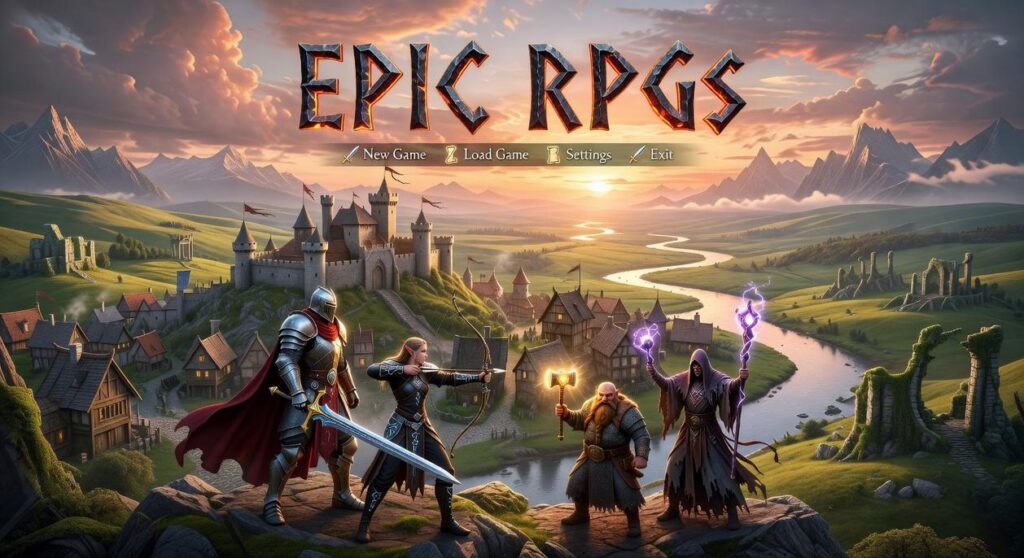
Genre Showcase: Role-Playing Games and Grand Adventures

Role-playing games (RPGs) are built on a simple promise: step into another life. At their best, they use world-building (the craft of designing believable settings, cultures, and histories) and character design (the visual and narrative construction of a character’s identity) to create epic scope—even when technical detail is limited.
Take Stardew Valley. On the surface, it’s humble pixel art. Yet that simplicity creates warmth. The bright palettes and readable sprites make Pelican Town feel like home (and yes, many of us have spent more time there than in our actual kitchens). Some critics argue minimalist visuals limit immersion. I disagree. Constraints often sharpen creativity; the farm thrives because your imagination fills the gaps.
Then there’s Sea of Stars, a modern love letter to 16-bit RPGs. Its dynamic lighting and expressive sprites elevate nostalgia into spectacle. It proves evolution doesn’t mean abandoning roots. Similarly, Eastward blends pixel art with 3D lighting, crafting diorama-like cities that feel both retro and revolutionary.
Of course, skeptics say high-detail pixel art risks style over substance. Fair point. But when mechanics, pacing, and atmosphere align, style is substance.
What makes pixel art indie titles endure?
- Cohesive visual identity
- Focused character arcs
- Implied lore instead of exposition dumps
- Smart lighting to suggest scale
Pro tip: Limit environmental detail, but deepen emotional stakes—players remember feelings more than textures.
It’s no surprise many of these games appear among crowdfunded indie projects that found major success. When players believe in a world, they invest—financially and emotionally.
Ultimately, grand adventure isn’t about graphical horsepower. It’s about heart.
The Pixels Have It – A Timeless Art Form
The world of pixel art indie games is far bigger and more diverse than it first appears. Beneath the retro-inspired visuals are deep mechanics, emotional storytelling, and innovative systems that rival any modern blockbuster. No matter your playstyle, there’s a richly crafted experience waiting for you.
The real challenge isn’t finding pixel art games—it’s separating the true gems from the endless wave of imitators. That’s where understanding how art supports gameplay makes all the difference.
Now you know what to look for: cohesion, creativity, and mechanics that use pixels with purpose. Dive into one of the recommended titles or use these insights to start your own journey into the vibrant world of indie pixel art.
 gg_jaguar is the kind of writer who genuinely cannot publish something without checking it twice. Maybe three times. They came to multiplayer strategy sessions through years of hands-on work rather than theory, which means the things they writes about — Multiplayer Strategy Sessions, Trend Tracker, Controller and Hardware Setup Tips, among other areas — are things they has actually tested, questioned, and revised opinions on more than once.
That shows in the work. gg_jaguar's pieces tend to go a level deeper than most. Not in a way that becomes unreadable, but in a way that makes you realize you'd been missing something important. They has a habit of finding the detail that everybody else glosses over and making it the center of the story — which sounds simple, but takes a rare combination of curiosity and patience to pull off consistently. The writing never feels rushed. It feels like someone who sat with the subject long enough to actually understand it.
Outside of specific topics, what gg_jaguar cares about most is whether the reader walks away with something useful. Not impressed. Not entertained. Useful. That's a harder bar to clear than it sounds, and they clears it more often than not — which is why readers tend to remember gg_jaguar's articles long after they've forgotten the headline.
gg_jaguar is the kind of writer who genuinely cannot publish something without checking it twice. Maybe three times. They came to multiplayer strategy sessions through years of hands-on work rather than theory, which means the things they writes about — Multiplayer Strategy Sessions, Trend Tracker, Controller and Hardware Setup Tips, among other areas — are things they has actually tested, questioned, and revised opinions on more than once.
That shows in the work. gg_jaguar's pieces tend to go a level deeper than most. Not in a way that becomes unreadable, but in a way that makes you realize you'd been missing something important. They has a habit of finding the detail that everybody else glosses over and making it the center of the story — which sounds simple, but takes a rare combination of curiosity and patience to pull off consistently. The writing never feels rushed. It feels like someone who sat with the subject long enough to actually understand it.
Outside of specific topics, what gg_jaguar cares about most is whether the reader walks away with something useful. Not impressed. Not entertained. Useful. That's a harder bar to clear than it sounds, and they clears it more often than not — which is why readers tend to remember gg_jaguar's articles long after they've forgotten the headline.