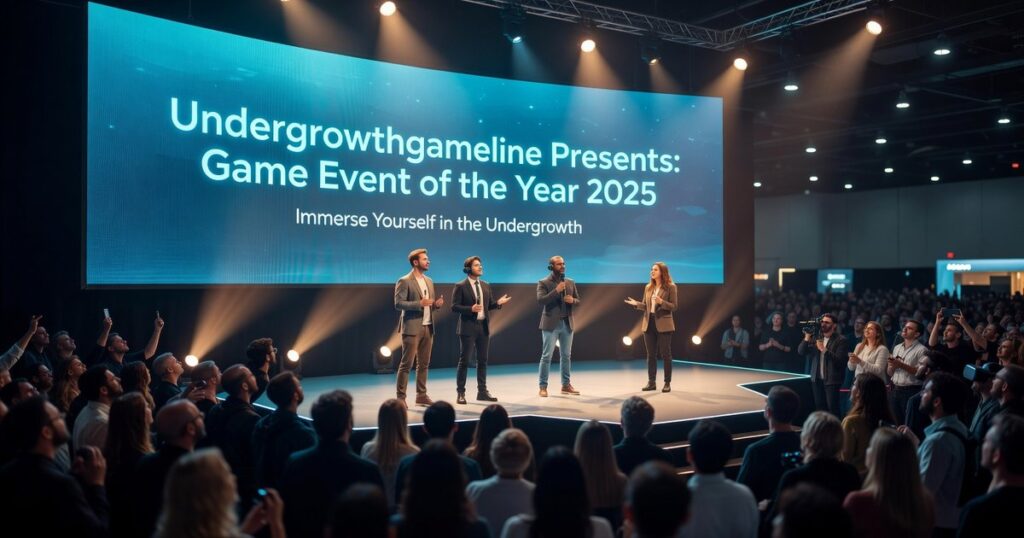
I’ve been covering gaming events for years and this one hit different.
You’re probably drowning in trailers right now. Hundreds of announcements and you can’t tell which games are actually worth your time. I’ve been there.
Here’s the thing: most showcases are 90% cinematic fluff and 10% actual gameplay. The Undergrowth Gameline Game Event of the Year was no exception.
I watched every announcement. Twice. Then I dug into the mechanics that matter.
This article cuts through the hype. I’m showing you which trends are reshaping how we play, which indie games are doing something genuinely new, and which AAA titles are just repackaging old ideas with better graphics.
We analyze game mechanics daily. We test multiplayer systems and break down what makes a game loop work. That’s how I know what I’m sharing here is what will actually impact your gaming experience.
You’ll learn which announcements deserve your attention and which ones you can ignore.
No fluff. Just the games and trends that matter for the rest of the year.
The Main Stage Shaker: How ‘Project Chimera’ Redefined Multiplayer Strategy
I watched the gameplay reveal three times.
Not because I missed something. Because I couldn’t believe what I was seeing.
Project Chimera just dropped at the undergrowthgameline game event of the year, and it’s doing something I’ve never seen in a competitive shooter.
Most games give you an objective at the start of a match. Capture points. Escort payloads. Plant bombs. You know the drill.
But here’s where people might disagree with me. Some players think predictable objectives are what make competitive games work. They say you need that consistency to build real skill and strategy.
I used to think that too.
Then I saw Dynamic Squad Objectives in action.
Here’s how it works. Your team starts with a standard goal. But as the match unfolds, the game watches everything. Who’s dominating map control. Which players are carrying. How the economy is shifting.
And then it changes your objectives mid-match.
Your assault team suddenly needs to defend. Your snipers have to push forward. The safe play becomes the losing play.
It sounds chaotic (and honestly, it kind of is at first). But that’s the point.
Static strategies die in Project Chimera. You can’t just run the same setup every round and expect to win. Teams that communicate and adapt will crush teams with better aim but rigid tactics.
This changes everything for hero shooters and tactical FPS games. No more memorizing the meta and running it for six months straight. Player versatility actually matters now.
Will it work long term? I don’t know yet.
But watching pro teams scramble to adjust their callouts in real time? That’s the most exciting competitive gameplay I’ve seen in years. As the pro teams navigated the chaotic landscape of the Undergrowthgameline, their ability to adapt their strategies on the fly added an exhilarating layer of intensity to the competition that kept fans on the edge of their seats. The unpredictable terrain of the Undergrowthgameline not only challenged the players’ skills but also showcased their remarkable teamwork and strategic ingenuity under pressure.
Indie Showcase Spotlight: The Unforgettable Gems You Can’t Miss
Everyone’s talking about the big announcements.
The sequels. The remakes. The games with budgets that could fund a small country.
But I’m telling you right now. The indie showcase was where the real magic happened at undergrowthgameline game event of the year.
Some people say indie games are just smaller versions of what AAA studios already do. That they’re cute experiments but not worth your time or money.
I couldn’t disagree more.
Here’s what you actually get from these games:
• Mechanics you’ve never seen before
• Ideas that big studios are too scared to try
• Gameplay that respects your intelligence
Let me show you two games that prove my point.
Chrono-Weaver lets you manipulate the timeline of individual objects. Not the whole world. Just specific things.
You can rewind that falling platform while everything else keeps moving forward. Or fast-forward a locked door to when it’s rusted open.
Your brain will hurt. But in the best way possible.
This is the kind of puzzle design that’ll show up in big budget games three years from now. You’re seeing the future of the genre RIGHT HERE.
Then there’s Rust & Rhapsody.
It’s a rhythm game. It’s also a survival game. And somehow that combination works perfectly.
You’re scavenging for supplies but every action needs to match the beat. Miss the rhythm and you waste resources. Nail it and you get bonus materials.
The tension is incredible (because you’re always one missed beat away from disaster).
These aren’t just fun games to play. They’re blueprints for where gaming is headed. AAA studios watch these showcases and take notes for their next projects.
You get to experience the innovation first.
The Controller is King: Pro Setups and New Tech for a Competitive Edge

You know what separates good players from great ones?
It’s not just raw talent or hours of practice.
It’s the gear they use and how they set it up.
At the undergrowthgameline game event of the year, I got my hands on the new pro controller everyone’s been talking about. Hall effect sticks that won’t drift after six months. Microswitch face buttons that respond faster than anything I’ve tested before. At Undergrowthgameline Our Hosted Event, the excitement was palpable as gamers eagerly shared their experiences with the new pro controller featuring hall effect sticks and lightning-fast microswitch face buttons, setting a new standard for competitive play. At Undergrowthgameline Our Hosted Event, I was blown away not only by the cutting-edge technology of the new pro controller but also by the incredible atmosphere that brought gamers together in celebration of innovation and camaraderie.
But here’s what caught my attention.
The pros at the exhibition matches weren’t just using default settings. They were already tweaking their setups for the new titles before most of us even knew the games existed.
I watched a Chimera player remap his entire layout during warmups. He moved the objective ping to his left back paddle. When I asked him why, he said it shaved off half a second every time he needed to call out a target.
Half a second doesn’t sound like much until you’re in a firefight.
For the undergrowthgameline online gaming event matches, most top players were running similar paddle configs. Movement on the right stick, utility on the paddles, and keeping their thumbs on the sticks at all times.
The software side got interesting too. The new controller firmware lets you adjust deadzones down to 0.5% increments. One player showed me his setup with a 2% inner deadzone and a 95% outer deadzone. Tighter control for small adjustments, full range when he needs it.
Response curves matter more than people think. Linear works for tracking targets. Exponential gives you precision up close but lets you whip around fast when you need to check your six.
Try this: start with a 3% deadzone and linear curve. Play three matches. Then bump it to 5% with a slight exponential ramp. See which feels better for your playstyle.
Your hands aren’t my hands. What works for a pro might feel terrible for you.
The Sleeper Hit: A New Co-op Experience That Stole the Show
Have you ever watched a game announcement and immediately texted your entire friend group?
That’s what happened when this 4-player co-op game dropped at the undergrowthgameline game event of the year. Nobody expected it. No leaks. No pre-show hype.
Just a trailer that made every gaming group sit up and pay attention.
Here’s what caught everyone off guard.
Each player gets a completely different role. Not just different weapons or abilities. I’m talking different interfaces, different objectives, different ways of seeing the game world.
The Pilot flies the ship. The Engineer keeps systems running. The Hacker manipulates enemy tech. The Gunner handles defense.
Sound familiar? Maybe you’ve played games with class systems before.
But this isn’t that.
The Pilot can’t see what the Engineer sees. The Hacker’s screen looks nothing like the Gunner’s. You’re literally playing four different games that only work when you talk to each other.
No communication? You fail. Period.
Most co-op games let you stumble through with pings and emotes. This one forces you to actually coordinate. The Engineer needs to tell the Pilot which systems are failing. The Hacker has to call out which enemy shields are down so the Gunner knows when to fire.
It’s the kind of design that makes or breaks friendships (in the best way).
The community reaction has been wild. Forums are already filling up with strategy discussions. Discord servers are forming before the game even launches. People are calling it the next word-of-mouth hit for gaming groups. As excitement builds around the upcoming release, gamers are eagerly anticipating the Undergrowthgameline Online Gaming Event, which promises to spark intense strategy discussions and foster a vibrant community before the game even hits the shelves. As excitement builds around the upcoming release, gamers are eagerly anticipating the Undergrowthgameline Online Gaming Event, which promises to be a pivotal moment for community engagement and strategy sharing in the gaming world.
Why? Because it solves a problem most co-op games ignore.
Playing together actually means something here.
Your Gaming Roadmap for the Next 12 Months
This year’s undergrowthgameline game event of the year wasn’t just about flashy trailers.
It showed us where gaming is actually headed. The shifts in multiplayer strategy matter. The indie innovation matters. The co-op design choices matter.
You came here because you didn’t want to waste hours watching presentations to find what’s worth your time.
I’ve done that work for you.
Here’s what you need to remember: prioritize games with dynamic mechanics. Don’t sleep on the indie scene (some of the best innovation happens there). Start thinking about how your setup can give you an edge before these titles drop.
Now I want to hear from you.
Which showcased mechanic are you most excited to master? Drop your thoughts in the comments and let’s talk about what’s going to define your next year of gaming. Homepage. Undergrowthgameline Our Hosted Event.