

What makes the difference between a game players love for years and one they abandon after a week? The answer lies in gameplay balance. This article explores the foundational game balance principles that separate legendary experiences from frustrating ones. We address the core problem of broken mechanics, dominant strategies, and stale metas that drive players away. Drawing on deep analysis of competitive multiplayer systems and single-player progression curves, we outline a proven framework for lasting engagement. You’ll learn how developers ensure every choice feels meaningful, every challenge fair, and every victory earned—creating experiences players want to return to again and again.
The Foundational Equation: Balancing Risk and Reward
Every powerful choice must carry a meaningful cost. That’s the foundational equation behind strong design. In simple terms, risk is the potential downside (exposure, vulnerability, opportunity cost), while reward is the upside (damage, map control, momentum). When those two forces are balanced, players make interesting decisions instead of obvious ones.
Consider an FPS sniper rifle vs. a submachine gun:
| Weapon | Risk | Reward | Playstyle Impact |
|---|---|---|---|
| Sniper Rifle | Slow fire rate, tunnel vision, visible scope glint |
One-shot elimination | Patient, positional, punishing |
| SMG | Limited range, lower burst damage | Mobility, forgiveness, sustained pressure | Aggressive, flexible, reactive |
High-risk/high-reward tools like the sniper create tension (and highlight-reel moments worthy of esports montages). Low-risk/low-reward options like SMGs promote consistency and accessibility.
Some argue overpowering items make games more exciting. After all, who doesn’t love feeling unstoppable? But without trade-offs, dominant strategies emerge—and choice disappears. That’s where game balance principles matter most.
Map your mechanics on a spectrum. If a high reward tool has minimal risk, it’s overpowered. If risk outweighs reward, it gathers dust in the loadout screen.
For deeper design context, revisit understanding core game mechanics a beginners guide.
Beyond Mirror Matches: The Power of Asymmetrical Balance
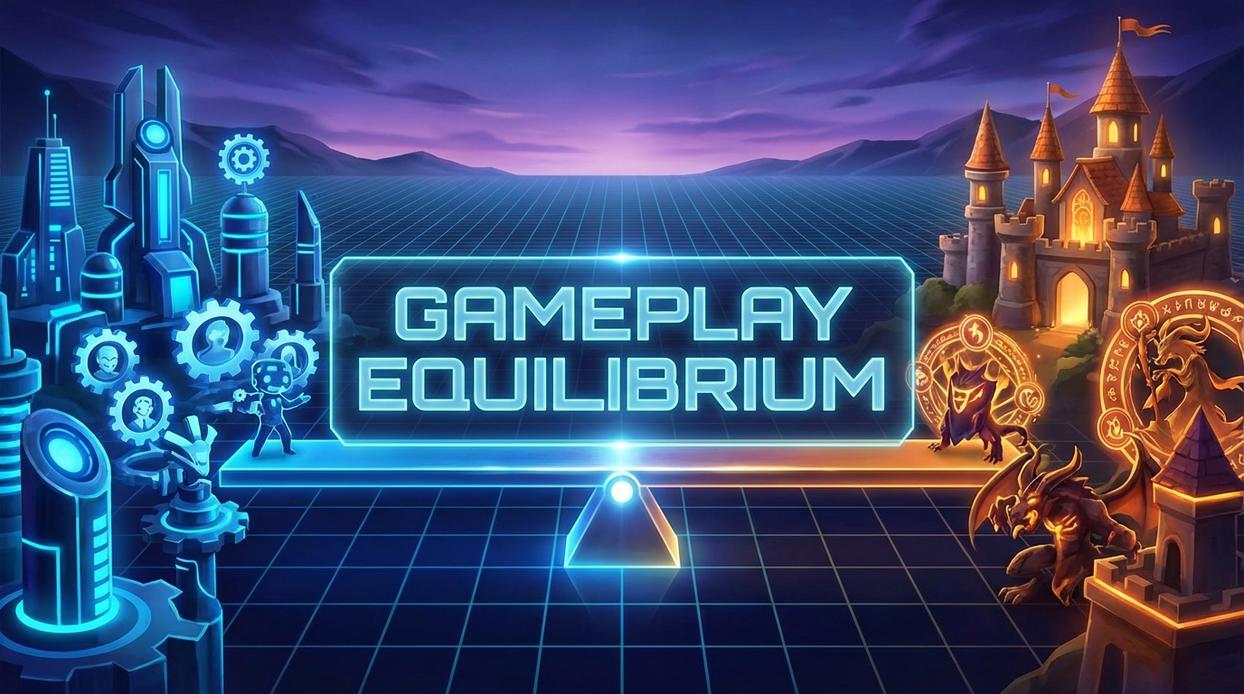
Asymmetrical balance is the idea that characters, factions, or classes can be fundamentally different yet equally viable. Instead of mirror matches—where both sides have identical tools—you get a rock-paper-scissors dynamic. One faction overwhelms with numbers, another dominates with elite power, and a third wins through mobility or control. Different paths. Equal potential.
Take the classic RTS example: Zerg swarm with cheap, fast units, while Protoss rely on fewer, expensive powerhouses. Neither is “better.” They simply demand different thinking. Winning with Zerg feels like juggling flaming swords; winning with Protoss feels like placing deliberate chess pieces (and yes, sometimes like being Thanos with a tighter budget).
Now here’s the contrarian take: total fairness is overrated. Many players argue perfect symmetry is the gold standard because it’s easier to measure and tune. But strict symmetry often kills creativity. If every option is identical, optimization solves the game—and solved games get stale fast.
True asymmetry, guided by solid game balance principles, prevents a dominant strategy from taking over. For every strength, there must be a clear, exploitable weakness. High damage? Low mobility. Massive health? Slow recovery.
Pro tip: If players can’t explain a faction’s weakness in one sentence, it’s probably overtuned.
Balance isn’t about sameness. It’s about meaningful difference that survives competition.
Designing for Depth: The Role of Counter-Play
Counter-play means that for every strong strategy, there’s a clear and usable response. If one tactic dominates without resistance, players feel helpless (and helpless players tend to quit). Counter-play restores agency—the sense that your decisions matter.
Think of a classic fighting game triangle:
- Attacks are countered by blocking
- Blocks are countered by throws
- Throws are countered by well-timed attacks
No single action is always correct. That structure is a practical application of game balance principles. It ensures power is conditional, not absolute.
Some designers argue that strong, nearly unstoppable mechanics create excitement. And they can—briefly. But without counter-play, excitement turns into frustration. A powerful move is fun to use, yet miserable to face if no answer exists. Balance doesn’t mean removing strength; it means embedding vulnerability.
This ties into skill floors and skill ceilings. A low skill floor means beginners can participate effectively. A high skill ceiling means veterans can refine timing, prediction, and execution to outperform others. Good counter-play raises the ceiling without raising the floor too high.
When designing a new mechanic, ask: How does a clever player defeat this? If you can’t answer clearly, neither can your players.
The Living Game: Balancing with Data and Community
In today’s live-service ecosystem, from competitive hero shooters to tight-knit indie brawlers on regional servers, balance starts with telemetry—the automated collection of in-game statistics like win rates, pick rates, and damage per match. These numbers spotlight statistical outliers fast. If a jungler in a ranked ladder across NA-East is posting a 58% win rate at Platinum and above, that’s a red flag.
But raw data has limits. It tells us what is happening, not why. A low-win-rate character might be underpowered—or simply mechanically demanding, like a high-APM combo specialist. Without context, you risk “fixing” the wrong problem.
That’s where the human layer matters. Community feedback, Discord scrims, and even salty post-match threads reveal the feeling of imbalance. A stun-lock mechanic can be statistically fair yet feel oppressive (and perception shapes player retention as much as numbers do).
Smart studios apply game balance principles through incremental patch cycles. Instead of meta-shattering overhauls before a major seasonal tournament, they ship controlled adjustments—small damage tweaks, cooldown nudges—then reassess. This steady cadence keeps competitive integrity intact while proving the game isn’t static, but truly alive.
Understanding game balance is crucial not only for maintaining fair competition but also for implementing effective Resource Management Strategies in Multiplayer Survival Games, where every decision can significantly impact a player’s success.
Your Blueprint for a Balanced Experience
You came here to understand how to build a truly balanced game experience—and now you have a clear, practical framework to do it. By applying Risk vs. Reward, Asymmetry, Counter-Play, and Data-Informed Iteration, you avoid the frustration of broken mechanics and create systems that reward skill, strategy, and smart decision-making.
Ignoring balance leads to churn, exploits, and disengaged players. Mastering it creates loyalty and depth.
Now it’s your move: audit your current game systems using these principles and refine what’s not pulling its weight. Join thousands of competitive designers and players leveling up their mechanics—start optimizing your balance today.
 andre17 is the kind of writer who genuinely cannot publish something without checking it twice. Maybe three times. They came to trend tracker through years of hands-on work rather than theory, which means the things they writes about — Trend Tracker, Multiplayer Strategy Sessions, Insightful Reads, among other areas — are things they has actually tested, questioned, and revised opinions on more than once.
That shows in the work. andre17's pieces tend to go a level deeper than most. Not in a way that becomes unreadable, but in a way that makes you realize you'd been missing something important. They has a habit of finding the detail that everybody else glosses over and making it the center of the story — which sounds simple, but takes a rare combination of curiosity and patience to pull off consistently. The writing never feels rushed. It feels like someone who sat with the subject long enough to actually understand it.
Outside of specific topics, what andre17 cares about most is whether the reader walks away with something useful. Not impressed. Not entertained. Useful. That's a harder bar to clear than it sounds, and they clears it more often than not — which is why readers tend to remember andre17's articles long after they've forgotten the headline.
andre17 is the kind of writer who genuinely cannot publish something without checking it twice. Maybe three times. They came to trend tracker through years of hands-on work rather than theory, which means the things they writes about — Trend Tracker, Multiplayer Strategy Sessions, Insightful Reads, among other areas — are things they has actually tested, questioned, and revised opinions on more than once.
That shows in the work. andre17's pieces tend to go a level deeper than most. Not in a way that becomes unreadable, but in a way that makes you realize you'd been missing something important. They has a habit of finding the detail that everybody else glosses over and making it the center of the story — which sounds simple, but takes a rare combination of curiosity and patience to pull off consistently. The writing never feels rushed. It feels like someone who sat with the subject long enough to actually understand it.
Outside of specific topics, what andre17 cares about most is whether the reader walks away with something useful. Not impressed. Not entertained. Useful. That's a harder bar to clear than it sounds, and they clears it more often than not — which is why readers tend to remember andre17's articles long after they've forgotten the headline.