
Choosing the right controller can completely change how your games feel and perform. If you’re here, you’re likely trying to decide between wired and wireless options—and want a clear, no-nonsense breakdown that actually helps you make the right call. This article delivers a detailed wired vs wireless controllers comparison focused on performance, latency, battery life, comfort, competitive play, and long-term value.
We’ve tested controllers across multiple platforms, analyzed input response data, and compared real-world multiplayer scenarios to separate marketing claims from measurable results. Whether you’re a competitive player chasing minimal input lag, a casual gamer who values convenience, or someone optimizing their entire setup, you’ll find practical insights tailored to your needs.
By the end, you’ll understand the true trade-offs between wired reliability and wireless freedom—and know exactly which controller type fits your playstyle, setup, and gaming goals.
Choosing Your Weapon: The Ultimate Controller Showdown
This isn’t just gear talk—it’s a performance decision. Pick wrong, and you’ll feel it in every missed parry (yes, even if you blame lag).
The Four Battlegrounds
In this wired vs wireless controllers comparison, I’ll be blunt: latency still matters. Wired pads often clock lower input delay, sometimes under 5ms, while wireless can add a few milliseconds depending on tech (RTINGS, 2023). That gap is tiny, but in fighters or competitive shooters, tiny counts.
Wireless wins for convenience and clean setups. Power management? Batteries die mid-raid (tragic). Cost varies.
Choose what fits you.
Performance & Latency: The Millisecond That Matters
Latency is the delay between pressing a button and seeing the action happen on screen. In practical terms, it’s input lag—the tiny gap between intent and execution. In competitive gaming, that gap can decide matches. NVIDIA reports that system latency differences of just 20–30 milliseconds can measurably affect player performance in fast-paced shooters (NVIDIA Reflex Latency Analysis, 2023). One missed frame in a 60 FPS game equals 16.67 ms. That’s not abstract—that’s the difference between landing a headshot and watching the kill cam.
Wired controllers set the benchmark. A direct USB connection typically delivers latency as low as 1–5 ms, with stable 1000Hz polling rates on high-end models. There’s no signal interference, no battery-saving throttling—just near-instantaneous transmission. In lab tests by sites like RTINGS, wired connections consistently outperform wireless in raw response time.
That said, wireless technology has evolved. Modern 2.4GHz RF dongles often achieve sub-10 ms latency, and Bluetooth 5.0 significantly improves stability and packet efficiency over older standards. For casual and even semi-competitive players, the difference is practically imperceptible (unless you have superhero reflexes).
Still, in pro-level scenarios—think EVO fighting game finals or high-stakes FPS tournaments—wired remains non-negotiable. Tournament organizers often require it to eliminate signal drops and ensure consistency.
Polling rates, measured in Hertz (Hz), indicate how often a controller reports inputs per second. A 1000Hz controller updates every 1 ms; 125Hz updates every 8 ms. High-end wired models commonly hit 1000Hz, while many wireless models range between 125Hz and 500Hz.
In any wired vs wireless controllers comparison, consistency under pressure is the real performance metric.
Convenience & Mobility: Cutting the Cord vs. Guaranteed Connection
The Freedom of Wireless
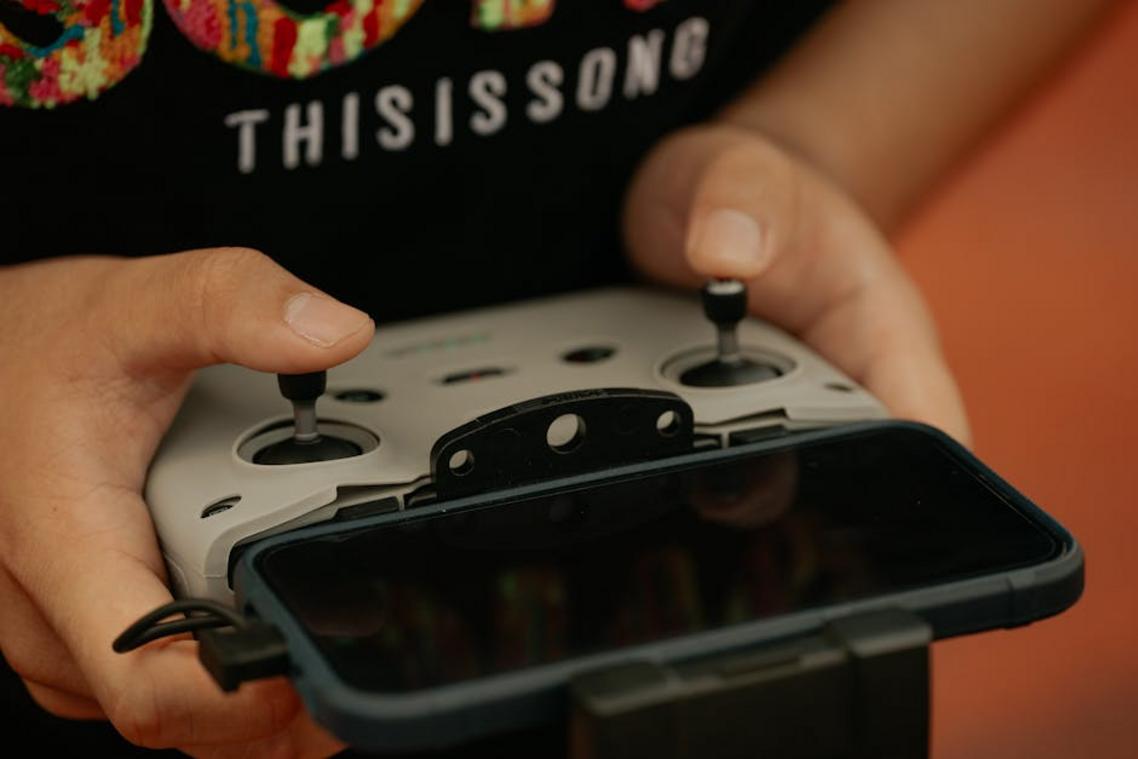
The biggest selling point of wireless controllers is obvious: freedom. No cable clutter. No awkward desk angles. No rearranging your living room because the cord won’t reach the couch. Wireless connectivity uses Bluetooth or proprietary 2.4GHz signals—radio frequencies that transmit inputs without a physical tether. The result? A cleaner setup and total flexibility in where you sit (yes, even sprawled out like it’s a cutscene).
But here’s what most reviews miss: wireless setups also reduce micro-drag—the subtle resistance of a cable brushing against a desk edge, which can affect precision during fast flicks. Competitive players notice.
The Risk of Interference
Still, wireless isn’t flawless. Signal interference—disruption caused by routers, smartphones, or even thick walls—can lead to input drops or brief disconnects. In crowded Wi-Fi environments, that risk increases (especially in apartments packed with overlapping networks). If you’re pushing ranked matches, even a split-second hiccup matters. For deeper optimization, review these reducing input lag practical tips for gamers.
The Reliability of Wired
A wired controller delivers a direct physical connection, meaning zero signal interference and virtually no random disconnects. Data travels through copper wiring straight to your console or PC. It’s stable. Predictable. Tournament organizers often require it for a reason.
Critics argue modern wireless latency is negligible—and they’re mostly right. But “mostly” isn’t the same as “never.” Wired means never.
Cable Management
Of course, cables bring limits: fixed length, tangles, and potential trip hazards. Smart routing clips or braided cords help (pro tip: anchor cables under your desk to eliminate slack swing).
In any wired vs wireless controllers comparison, the real edge comes down to environment, setup discipline, and how much unpredictability you’re willing to tolerate.
Power Management: The Unseen Tether of Wireless Gaming
At the heart of wireless gaming lies a simple, stubborn constraint: battery life. No matter how advanced the haptics or how low the latency, your controller is only as reliable as its remaining charge. In other words, freedom comes with a fuel gauge (and it never seems to blink at a convenient time).
When it comes to battery types, players typically choose between internal rechargeable lithium-ion packs and replaceable AA batteries. Lithium-ion batteries—rechargeable cells commonly used in smartphones—are convenient and cost-effective over time. According to the U.S. Department of Energy, lithium-ion cells offer high energy density and recharge efficiency (energy.gov). However, once they degrade, replacement can be tricky. AA batteries, on the other hand, offer instant swaps mid-session but create recurring costs and waste.
Then there’s the “play and charge” compromise. These kits let you plug in a USB cable when power runs low, temporarily converting your controller into a wired one. It works, sure—but it’s a bit like discovering your wireless hero has a cape tangled in a charging cord.
Meanwhile, in any wired vs wireless controllers comparison, wired models quietly win on one front: uninterrupted power. No charging schedules. No battery anxiety. Just infinite playtime.
Looking ahead, it’s reasonable to speculate that solid-state batteries or kinetic charging could reshape controller design. Still, until that future arrives, power management remains the invisible boss fight.
When it comes to cost, the upfront price is the first gut check. Typically, wireless controllers cost more than wired options, and in any wired vs wireless controllers comparison, that premium stands out immediately. Personally, if I’m gaming casually, I’d rather save the cash. Then again, wireless feels undeniably sleek (no cable tug mid-boss fight).
- Initial Purchase Price: Wireless models often sit at higher price points.
- Long-Term Costs: Charging docks, replacement batteries, or USB receivers add up over time.
- Platform Compatibility: Wired is plug-and-play, while wireless may require Bluetooth pairing or a dedicated dongle—especially on PC.
So, is convenience worth the markup?
The wired vs wireless controllers comparison really comes down to trade-offs. Wired means peak performance and rock-solid reliability; wireless means freedom and a clean setup.
If you’re the Competitive Purist, I’ll say it plainly: go wired. Zero-latency assurance matters when a single frame decides the match (yes, it’s that serious).
For the Couch Co-op Gamer, wireless wins. Fewer cables, fewer arguments, more room to celebrate.
The Budget-Conscious Player? Wired is simply smarter—cheaper, durable, no batteries to replace.
Personally, I prefer wired for ranked nights, wireless for everything else. Choose what fits your playstyle. It ultimately depends on your priorities most.
You came here to finally settle the debate and figure out which setup truly fits your playstyle. Now you’ve seen the strengths, trade-offs, and real-world performance differences that matter most when choosing between options in a wired vs wireless controllers comparison.
If you’ve ever struggled with input lag during competitive matches, battery anxiety mid-session, or cable drag at the worst possible moment, you know how frustrating the wrong controller choice can be. The right setup isn’t just about preference — it directly impacts your reaction time, comfort, and overall edge.
Now it’s time to act. Test your current setup against what you’ve learned. Fine-tune your controller settings, optimize your connection, and experiment with positioning to eliminate unnecessary latency or interference.
Level Up Your Setup the Right Way
Don’t let avoidable hardware issues hold back your performance. Gamers who consistently win pay attention to the small details — connection stability, response time, and comfort over long sessions.
If you’re serious about improving, dive into more controller optimization guides, multiplayer strategy breakdowns, and setup tutorials designed to give you a measurable advantage. Thousands of competitive players rely on proven techniques to sharpen their gameplay — and you can too.
Upgrade your setup, eliminate your weak points, and start playing at the level you know you’re capable of.